



How to Store Wood Pellets to Prevent Moisture: A Comprehensive Guide
The transition to sustainable biomass heating has revolutionized the way homeowners and businesses manage their energy consumption, offering an eco-friendly alternative to traditional fossil fuels. However, investing in high-quality heating fuel is only the first step in achieving a highly efficient and cost-effective heating system. Once you have sourced your supply from the best wood pellets supplier, the responsibility of maintaining that quality falls entirely on your storage methods. Moisture is the absolute greatest enemy of any compressed biomass fuel. When exposed to humidity, dampness, or direct water contact, a premium Wood Pellet will quickly lose its structural integrity, absorb the water like a sponge, and revert into useless sawdust. This degradation not only destroys your financial investment but can also wreak havoc on your heating equipment. Feeding damp, degraded, or crumbling fuel into a sophisticated pellet machine can lead to severe auger jams, inefficient combustion, excessive smoke production, and potential long-term damage to the internal mechanical components of the stove or boiler. Therefore, understanding the scientific and practical aspects of moisture prevention is absolutely critical for anyone relying on biomass energy. This comprehensive guide will walk you through the precise steps, expert methodologies, and industry best practices required to store your fuel perfectly. By implementing these meticulously researched storage strategies, you can ensure that every single Wood Pellet retains its dense, energy-rich properties, guaranteeing a warm, safe, and highly efficient heating season from the first cold day of winter to the last.
1. Choosing the Ideal Location for Storing Your Wood Pellet Supply

Selecting the absolute best physical location for your biomass fuel is the foundational step in any successful storage strategy. Even if you purchase the highest-grade fuel available from the best wood pellets supplier, placing that fuel in a vulnerable environment will inevitably lead to moisture contamination and complete product failure. The ideal storage location is an indoor, climate-controlled environment that provides a permanent barrier against the unpredictable outdoor elements. Basements, attached garages, and weather-tight storage sheds are generally considered the gold standard for long-term storage. These environments naturally protect the fuel from direct rainfall, heavy snowfall, and the drastic temperature fluctuations that cause condensation. When evaluating your indoor space, it is crucial to look for areas that remain consistently dry year-round. Avoid placing your fuel near known moisture sources such as uninsulated exterior walls, utility sinks, washing machines, or sub-grade masonry that tends to weep during heavy rains.
If indoor storage is absolutely impossible due to space constraints, outdoor storage must be approached with extreme caution and meticulous planning. Storing fuel outdoors requires significantly more than just throwing a standard plastic tarp over the bags. You must construct or utilize a dedicated, covered structure that prevents any direct precipitation from reaching the packaging. Furthermore, the chosen location must factor in the physical distance to your pellet machine. A storage area that is too far from your primary heating appliance will make the daily or weekly chore of transporting the heavy bags incredibly arduous, especially during severe winter storms. Strategically placing your storage area in a dry, highly accessible, and weather-resistant zone ensures that your daily operations remain smooth and that your fuel remains pristine. Remember that every single Wood Pellet is manufactured under immense pressure to remove moisture, and the location you choose must actively work to keep that moisture out permanently.
2. Utilizing Airtight Containers to Protect Wood Pellets from Humidity

Understanding the natural physical properties of biomass is essential for effective storage. Wood is inherently hygroscopic, meaning it constantly interacts with the air around it, absorbing or releasing moisture to achieve an equilibrium with the surrounding relative humidity. Even though a premium Wood Pellet is super-compressed during the manufacturing process, it retains this natural characteristic. When the ambient humidity in your storage area rises significantly, the wood fibers will begin to pull moisture directly out of the air. This causes the compressed pellets to swell, lose their smooth exterior, and ultimately crumble back into the raw sawdust they were originally made from. To effectively combat this natural phenomenon, utilizing airtight storage containers becomes a critical line of defense, especially when dealing with opened bags, bulk deliveries, or environments with naturally high humidity.
When transitioning fuel from its original manufacturer packaging—which may become punctured or torn during transport—you should invest in heavy-duty, completely sealed containers. High-quality plastic storage bins equipped with rubber gasket seals, large galvanized metal trash cans with locking lids, or specialized silo bags offer phenomenal protection against ambient humidity. These airtight barriers completely cut off the fuel’s exposure to the fluctuating moisture levels in the air, locking in the perfect dryness that was achieved at the factory. This practice is especially vital if you live in coastal regions or areas prone to dense fog and heavy summer humidity. By meticulously sealing your fuel, you honor the superior quality provided by the best wood pellets supplier and prevent wasteful degradation. Furthermore, airtight containers prevent unwanted pests like mice and insects from nesting in the sawdust. Ensuring that your fuel remains hard, dry, and clean is the only way to guarantee that your pellet machine operates at its peak thermal efficiency without suffering from annoying mechanical jams.
3. Best Practices for Elevating Wood Pellets Off the Ground

One of the most common and devastating mistakes made in biomass fuel storage is leaving the bags directly in contact with the ground or a concrete floor. Concrete is a highly porous material that acts like a massive, hard sponge, continuously drawing moisture up from the earth below through a process known as capillary action. Even if a concrete floor appears completely dry to the naked eye, it is constantly transmitting microscopic water vapor into the air directly above it. If a bag containing a high-quality Wood Pellet is placed directly onto this surface, the severe temperature differential between the cold concrete and the warmer ambient air will cause immediate condensation on the inside of the plastic packaging. Over time, this trapped moisture will systematically destroy the bottom layers of your fuel supply, turning an expensive investment into a soggy, unusable mess.
To entirely eliminate this risk, elevation is a mandatory practice in any storage setup. You must always use heavy-duty wooden shipping pallets or construct a specialized, raised shelving system to create a definitive physical gap between the cold floor and your fuel. This critical air space not only severs the path of capillary moisture transfer but also allows for necessary airflow underneath the stack. When stacking your bags on the pallets, it is highly recommended to use a crisscross pattern. This interlacing technique provides structural stability to the stack, preventing dangerous collapses while simultaneously creating small channels for air to move freely between the individual bags. By adhering to these strict elevation protocols, you comprehensively protect the high-grade product you purchased from the best wood pellets supplier. A properly elevated and well-ventilated stack ensures that the fuel entering your pellet machine remains consistently dry, hard, and perfectly formulated for maximum heat output and minimal ash production.
4. Maintaining Optimal Ventilation and Temperature for Wood Pellet Storage
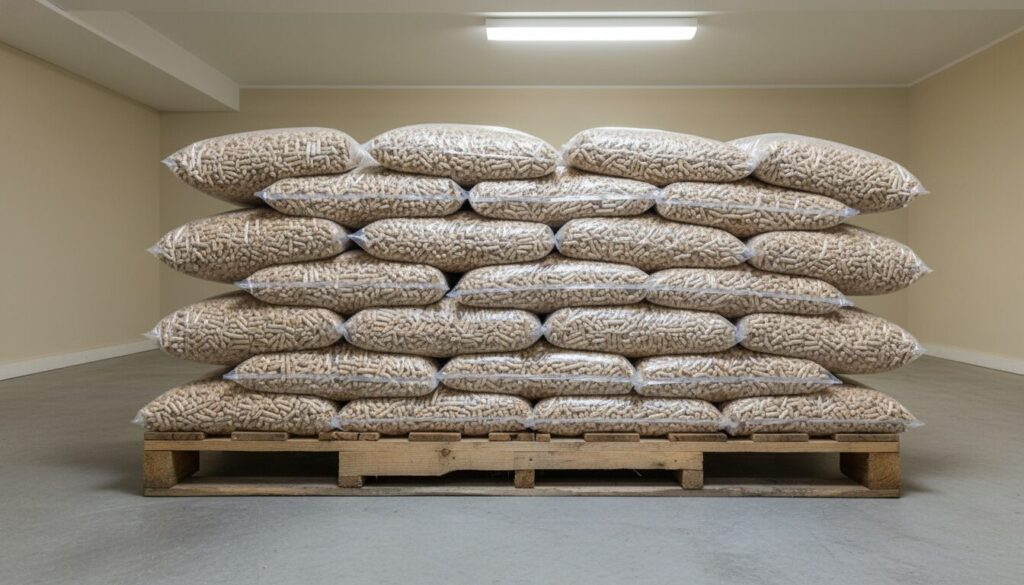
While isolating your fuel from direct water and ground moisture is crucial, actively managing the internal climate of your storage area is equally vital for long-term preservation. Stagnant, unmoving air is a primary catalyst for moisture accumulation and condensation. If a storage room, basement, or shed is entirely sealed without any fresh air exchange, the natural temperature fluctuations that occur between day and night can cause the room to “sweat.” This sweating creates a highly humid microclimate that can penetrate even small micro-tears in the original packaging, slowly degrading every single Wood Pellet within the stack. Proper ventilation is the key to mitigating this invisible threat. By ensuring a steady flow of air, you allow any trapped humidity to be safely exhausted outdoors, keeping the internal atmosphere consistently dry and stable.
Implementing effective ventilation can be achieved through both passive and active systems. Passive ventilation involves installing louvered wall vents, soffit vents, or simply ensuring that the storage shed has adequate roof ridge ventilation to allow warmer, moist air to escape naturally. For more challenging environments, such as deep subterranean basements or heavily insulated garages, active mechanical ventilation may be required. Utilizing small exhaust fans to force air circulation or deploying a high-capacity electric dehumidifier can drastically alter the moisture profile of the room. It is highly recommended to monitor the space with a digital hygrometer, aiming to keep the relative humidity consistently below 50 percent. Maintaining this optimal temperature and humidity balance is a testament to treating your fuel properly. When you preserve the premium quality delivered by the best wood pellets supplier, you directly enhance the operational lifespan and combustion efficiency of your pellet machine, ensuring a flawless, jam-free heating experience all winter long.
5. Regular Inspection Techniques to Identify Moisture in Wood Pellets

The final, and perhaps most proactive, step in a comprehensive moisture prevention strategy is implementing a strict routine of regular visual and tactile inspections. Storage environments are rarely static; seasonal changes, extreme weather events, or unexpected structural leaks can drastically alter the conditions of your storage space without warning. If you simply stack your fuel in the autumn and ignore it until the depths of winter, you risk discovering a catastrophic moisture problem only when it is too late. Regular monitoring allows you to catch minor condensation issues or tiny roof leaks before they have the opportunity to contaminate and destroy your entire bulk supply. Consistent inspections are the ultimate safeguard for protecting the valuable energy reserves you acquired from the best wood pellets supplier.
Begin your inspection routine visually by closely examining the outer plastic wrapping of the bags. Look meticulously for any tiny water droplets or condensation fog forming on the inside of the translucent plastic. Pay special attention to the bottom corners of the bags, looking for an unusual accumulation of loose sawdust, which is a definitive indicator that a Wood Pellet has absorbed moisture and begun to disintegrate. Following the visual check, perform a tactile test by squeezing a few pellets from an opened bag. A perfectly preserved pellet will feel extremely hard, smooth, and will snap cleanly in half with a distinct cracking sound. If the pellet crumbles easily beneath the pressure of your fingers, it has been compromised by humidity. Finally, rely on your sense of smell; a distinctively musty, moldy, or damp earthy odor is a clear sign of severe water intrusion. If any compromised fuel is discovered, it must be immediately isolated and removed from the clean supply to prevent further cross-contamination. Feeding thoroughly inspected, bone-dry fuel into your pellet machine is the absolute best way to guarantee a safe, exceptionally warm, and highly efficient heating season.
6. Frequently Asked Questions: (FAQ)
Q: What exactly happens if a **Wood Pellet** is exposed to direct moisture or high humidity?
When a Wood Pellet is exposed to moisture, its highly compressed wood fibers act like a sponge, absorbing the water rapidly. This absorption causes the pellet to swell significantly, lose its dense structural integrity, and eventually break down entirely into raw sawdust. Burning this damp, degraded material is highly inefficient, produces excessive smoke, and can cause severe mechanical clogs and long-term damage to the internal components of your heating appliance.
Q: Is it ever safe to store my fuel supply outside if I buy from the **best wood pellets supplier**?
No, storing your fuel outdoors is highly discouraged, regardless of the quality provided by the best wood pellets supplier. Even premium products are susceptible to environmental moisture. If outdoor storage is your absolute only option, the fuel must be elevated on sturdy pallets, completely wrapped in heavy-duty waterproof tarps, and placed under a permanent roof or shelter to prevent any direct contact with rain, snow, or rising ground moisture.
Q: How long can I effectively store my biomass fuel before it goes bad?
If you strictly follow proper storage protocols—keeping the fuel elevated, in a climate-controlled, well-ventilated, and completely dry environment—a standard Wood Pellet can technically last indefinitely without losing its energy value. However, to ensure peak combustion efficiency and safety, industry experts generally recommend utilizing your fuel supply within one to two heating seasons.
Q: Can burning damp or degraded fuel permanently damage my **pellet machine**?
Yes, attempting to burn compromised, damp fuel can cause serious operational failures in a pellet machine. The moisture prevents the fuel from burning cleanly, leading to an extreme buildup of sticky creosote, excessive ash, and dangerous exhaust smoke. Furthermore, the swollen, crumbling sawdust can easily jam the mechanical auger system, potentially burning out the electric feed motor and resulting in costly professional repairs.
Conclusion
In summary, mastering the art of biomass fuel storage is a non-negotiable requirement for anyone who wants to fully leverage the benefits of sustainable heating. The journey to a warm, energy-efficient home does not end when you take delivery of premium fuel from the best wood pellets supplier; it merely begins. By rigorously applying the strategies detailed in this guide—meticulously choosing a dry indoor location, utilizing heavy-duty airtight containers, strictly elevating your bags off porous concrete floors, actively managing ventilation, and conducting highly consistent inspections—you completely neutralize the threat of moisture. Protecting the structural integrity of every single Wood Pellet ensures that your fuel retains its maximum thermal energy potential. Ultimately, these preventative measures will dramatically prolong the lifespan of your expensive pellet machine, prevent frustrating mid-winter breakdowns, and guarantee a safe, cozy, and highly efficient home heating experience for many years to come. Take action today to audit your current storage setup and implement these expert best practices to safeguard your valuable heating investment.
Watch more:
Top 7 Benefits of Using Wood Pellets.
YouTube: Wood Pellet Vina
Facebook: Wood Pellet Vina
LinkedIn: Wood Pellet Vina
Website: Wood Pellet Vina
Leave a Reply